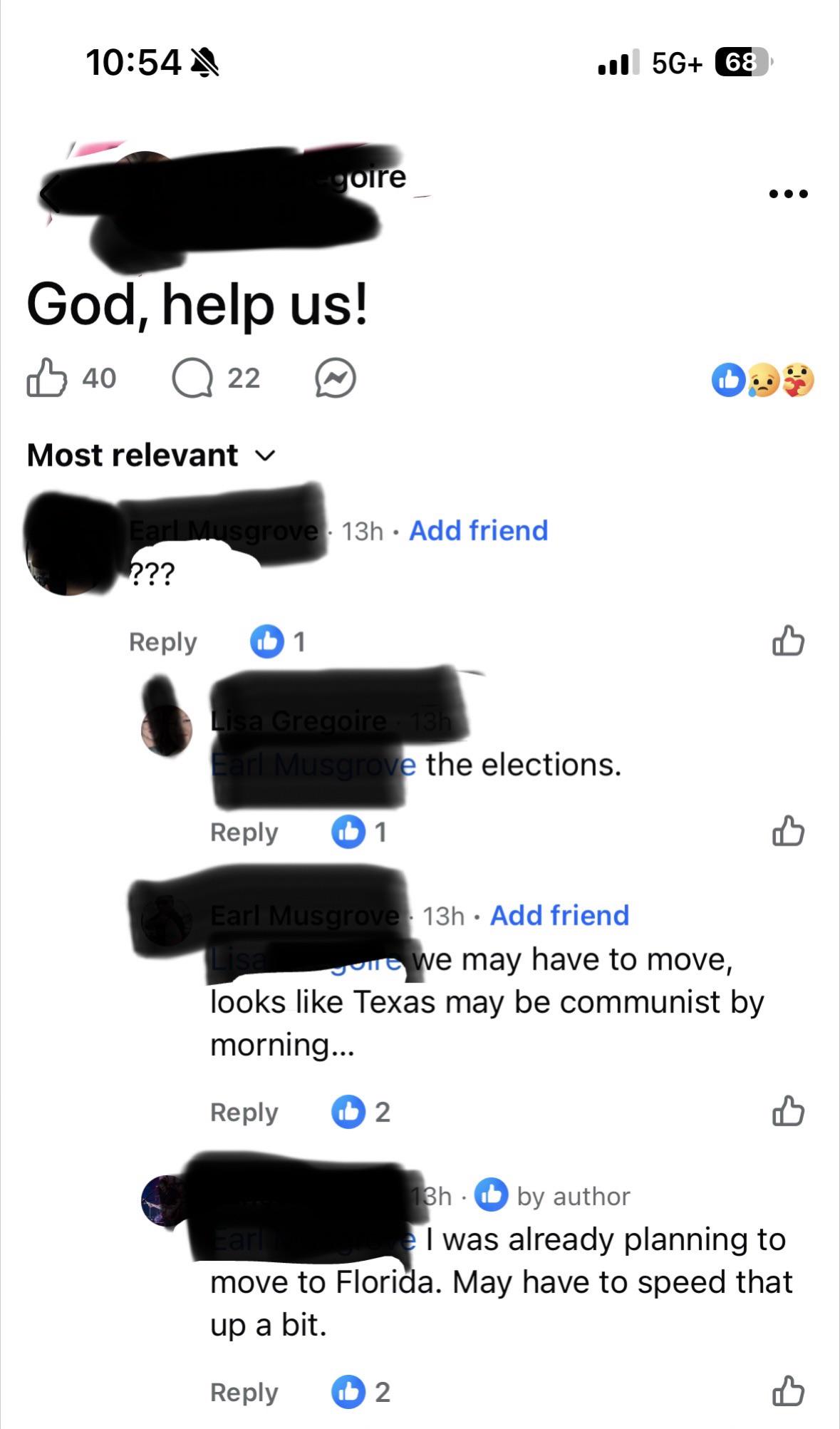
Following recent political shifts in long-held conservative strongholds, high-stakes elections continue to leave voters grappling with intense ideological polarization. When control of local or state representation shifts, the fallout often manifests as a stark cultural divide. For voters who spent decades under uniform political leadership, sudden electoral losses trigger profound anxiety, with many expressing fears of radical societal transformations virtually overnight.
At the core of these post-election reactions is a dramatic escalation in rhetoric. Rather than viewing an election loss through the lens of policy debates or shifting demographic trends, dissatisfied voters frequently frame political transitions as existential threats. Warnings of impending authoritarianism, economic collapse, or rapid moral decay dominate social circles, illustrating how political identity has become deeply tied to personal security.
Rhetorical Extremes and Political Anxiety
The immediate fallout from recent election outcomes highlights how quickly partisan discourse devolves into apocalyptic predictions. Critics of the losing political establishment point out that hyperbole often eclipses grounded discussion regarding actual legislative power or policy implementation.
"What a brunch of overly dramatic snowflakes," observed one observer, highlighting the contrast between political hyperbole and everyday realities.
Much of the anxiety stems from a tendency to equate moderate or opposing political platforms with extreme ideologies. Concerns regarding sudden system-overhauls often ignore the procedural pacing of government transitions, leaving voters reacting to hypothetical scenarios rather than immediate legislative realities.
"'Communist by morning' None of the new politicians take office until January," noted another watcher, pointing to the gap between immediate public panic and the actual timelines of official transitions.
Accountability and Electoral Shift
Beyond emotional reactions, recent political shifts reflect broader questions about accountability and governance. In regions that have experienced decades of single-party dominance, electors increasingly evaluate whether long-tenured leaders have adequately addressed persistent state and local issues. When voters feel their concerns remain unaddressed, party loyalty frequently buckles under the weight of frustration.
For some observers, the surprise surrounding unexpected election outcomes underscores a refusal among political bases to examine internal party shortcomings or candidate viability. When political parties field controversial figures or suffer from internal divisions, voters outside the core base often seek alternatives or choose to abstain entirely.
"The irony is these same people will say this every time Democrats win in the senate and/or presidency and then 2-4-8 years later we're not a communist country, nobody has taken their guns, LGBTQ people still make up an extremely small minority of the country, Their kids are not gay or Trans because of the public school system, Christianity is still the biggest religion and people are still saying Merry Christmas," reflected one commentator on the recurring nature of campaign-season panic.
"Yet the very next election cycle....it's the same thing all over again and they just keep buying it."
The Path Forward in a Divided Landscape
As election cycles become increasingly contentious, the challenge of post-election governance remains reconciling a divided public. When electoral outcomes are met with immediate declarations of societal ruin, the space for constructive political dialogue narrows significantly.
Ultimately, the reactions following major political realignments demonstrate that voters remain deeply divided not only on policy issues, but on basic perceptions of reality. Whether newly elected officials can bridge these divides—or whether hyper-partisan rhetoric will continue to define public discourse—remains a central question for the future of regional and national governance.